
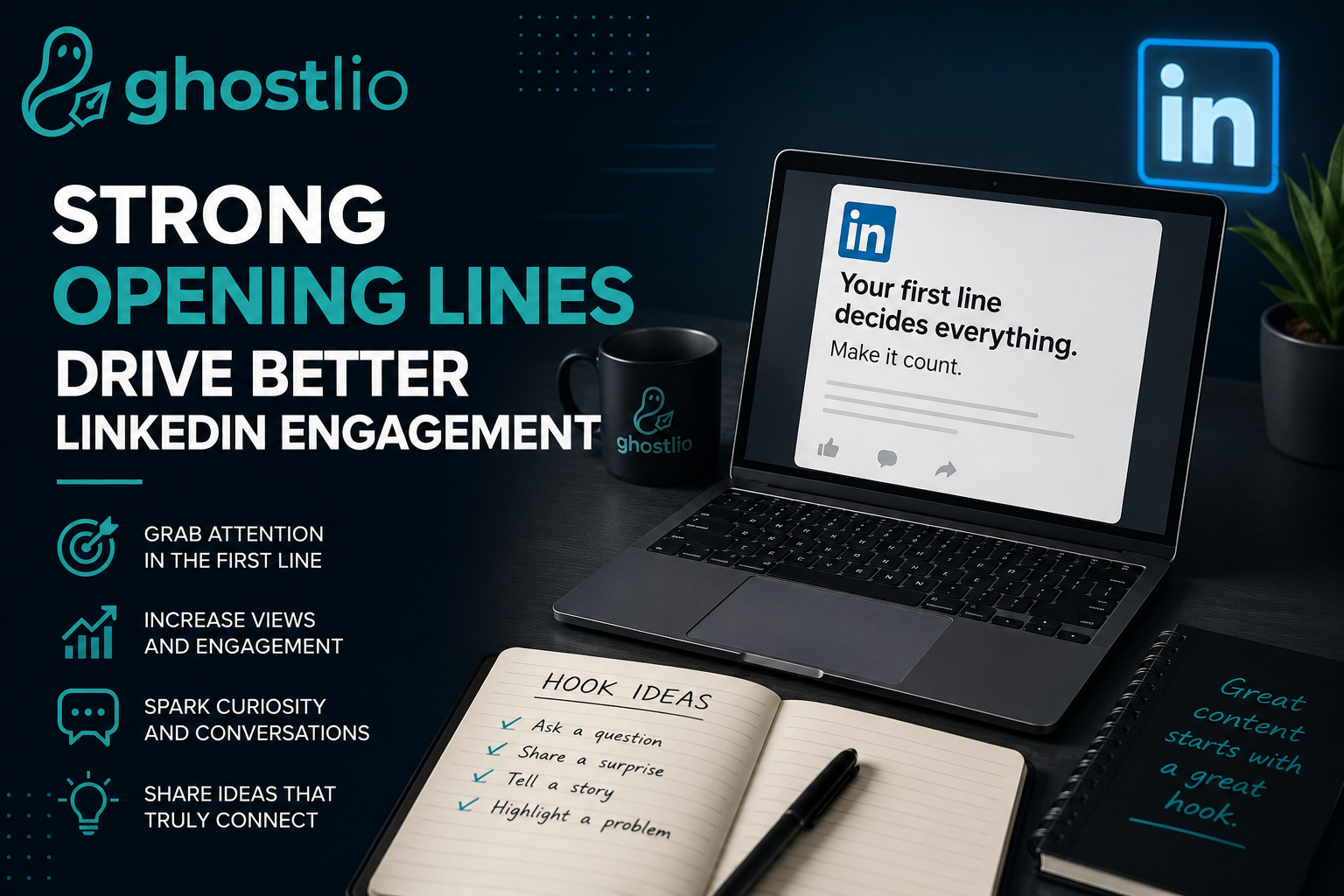
LinkedIn has become one of the most valuable platforms for professionals, business owners, marketers, founders, and creators. Every day, millions of posts compete for attention in busy feeds. The difference between a post that gets ignored and one that attracts meaningful engagement often comes down to the first sentence. If you are struggling to capture attention, you need a good hook for LinkedIn posts because that opening line determines whether people continue reading or scroll away.
The first few words of a LinkedIn post have one job: stop the scroll. When readers notice something interesting, surprising, relatable, or thought provoking, they are more likely to click “see more” and engage with the content.
Why the First Line Matters So Much
Most LinkedIn users make split second decisions while scrolling through their feeds. They rarely read every post they see. Instead, they scan headlines, images, and opening lines before deciding what deserves their attention.
A strong hook can:
- Increase visibility and engagement
- Encourage readers to click “see more”
- Improve reactions and comments
- Help important messages reach a larger audience
- Create curiosity that keeps readers reading
Without an effective opening line, even valuable content can go unnoticed.
What Makes a Great LinkedIn Hook?
Successful hooks share several common characteristics. They immediately spark curiosity or present information that feels relevant to the reader.
Some effective approaches include:
Asking a Thought Provoking Question
Questions naturally encourage people to pause and think.
Examples:
- Why do some LinkedIn posts get thousands of views while others get ignored?
- What is the biggest mistake professionals make on LinkedIn?
- Have you ever spent an hour writing a post that nobody read?
Questions invite participation and make readers feel involved from the start.
Sharing a Surprising Statement
Unexpected information often captures attention quickly.
Examples:
- My shortest LinkedIn post generated the most engagement.
- Most people focus on content quality and ignore the first sentence.
- One simple change doubled my LinkedIn reach.
Readers become curious and want to discover the story behind the statement.
Using Personal Experiences
People connect with authentic experiences and lessons.
Examples:
- I made the same LinkedIn mistake for three years.
- A simple posting habit transformed my engagement.
- What happened after I changed my posting strategy surprised me.
Personal stories feel genuine and encourage readers to continue reading.
Presenting a Common Problem
Addressing challenges that many professionals face can instantly create relevance.
Examples:
- Your LinkedIn content may be stronger than you think.
- Great ideas often fail because nobody reads the first line.
- Many professionals struggle to get attention despite sharing useful insights.
When readers recognize their own challenges, they become more interested in the solution.
Common Hook Mistakes to Avoid
Many LinkedIn users unintentionally weaken their posts by making avoidable mistakes.
Starting Too Broadly
Generic openings rarely create interest.
Weak example:
- Today I want to share some thoughts about LinkedIn.
This type of opening gives readers little reason to continue.
Revealing Everything Immediately
A hook should create curiosity without giving away the entire message.
Instead of explaining everything in the first sentence, provide enough information to encourage further reading.
Using Overly Complex Language
Simple language often performs better because it is easier to understand quickly.
LinkedIn users scroll fast. Clear and direct communication usually wins attention more effectively than complicated wording.
Ignoring Reader Interest
Many people start posts by talking only about themselves.
A stronger approach focuses on challenges, goals, experiences, or questions that readers care about.
How Hook Generators Save Time
Creating fresh opening lines consistently can be difficult, especially when posting regularly.
Many professionals spend significant time trying to craft the perfect first sentence. A dedicated hook generator can simplify the process by providing ideas based on your topic, opinion, or message.
Benefits include:
- Faster content creation
- More creative opening lines
- Reduced writer’s block
- Improved consistency
- Better engagement opportunities
Instead of staring at a blank page, users can generate multiple hook ideas and choose the one that best fits their content.
Who Benefits Most from Better LinkedIn Hooks?
Nearly anyone creating content on LinkedIn can benefit from stronger openings.
Business Owners
Business owners can use hooks to attract potential customers, partners, and industry connections.
Founders
Founders often share lessons, company updates, and personal experiences. Strong hooks help these stories reach more people.
Marketers
Marketing professionals rely on engagement and visibility. Effective hooks support content performance and audience growth.
Creators
Creators who publish regularly need fresh ways to capture attention. Strong opening lines help maintain audience interest over time.
Job Seekers
Professionals seeking new opportunities can use engaging hooks to showcase expertise and increase profile visibility.
Building a Repeatable Hook Strategy
Rather than trying to invent a completely new approach every time, create a system for developing opening lines.
Consider these steps:
- Identify the main message of your post.
- Think about the reader’s biggest challenge.
- Create curiosity around the topic.
- Test different hook styles.
- Track engagement patterns.
- Reuse successful formats with new topics.
Over time, you will discover which types of hooks resonate most with your audience.
The reality is simple. People cannot engage with content they never read. Before focusing on the body of your LinkedIn post, make sure the opening line earns attention. A compelling first sentence can transform how your content performs and help your ideas reach the audience they deserve.