
As environmental awareness continues to grow, homeowners and businesses are increasingly looking for pest control solutions that are both effective and eco-friendly. Traditional woodworm treatments have long relied on chemical insecticides to eliminate wood-boring beetles, but many people are now seeking alternatives that reduce environmental impact while still protecting valuable timber.
One modern solution gaining popularity is microwave pest treatment. Instead of using pesticides, this innovative technology relies on controlled microwave energy to generate heat inside infested timber, eliminating woodworm and other wood-boring insects without leaving harmful chemical residues. Because it minimizes the use of synthetic chemicals, microwave treatment is often considered a more sustainable option for many applications.
In this guide, we’ll explore the environmental benefits of microwave pest treatment, explain how it works, compare it with traditional chemical methods, and discuss why it is becoming an important part of environmentally responsible timber preservation.
What Is Microwave Pest Treatment?
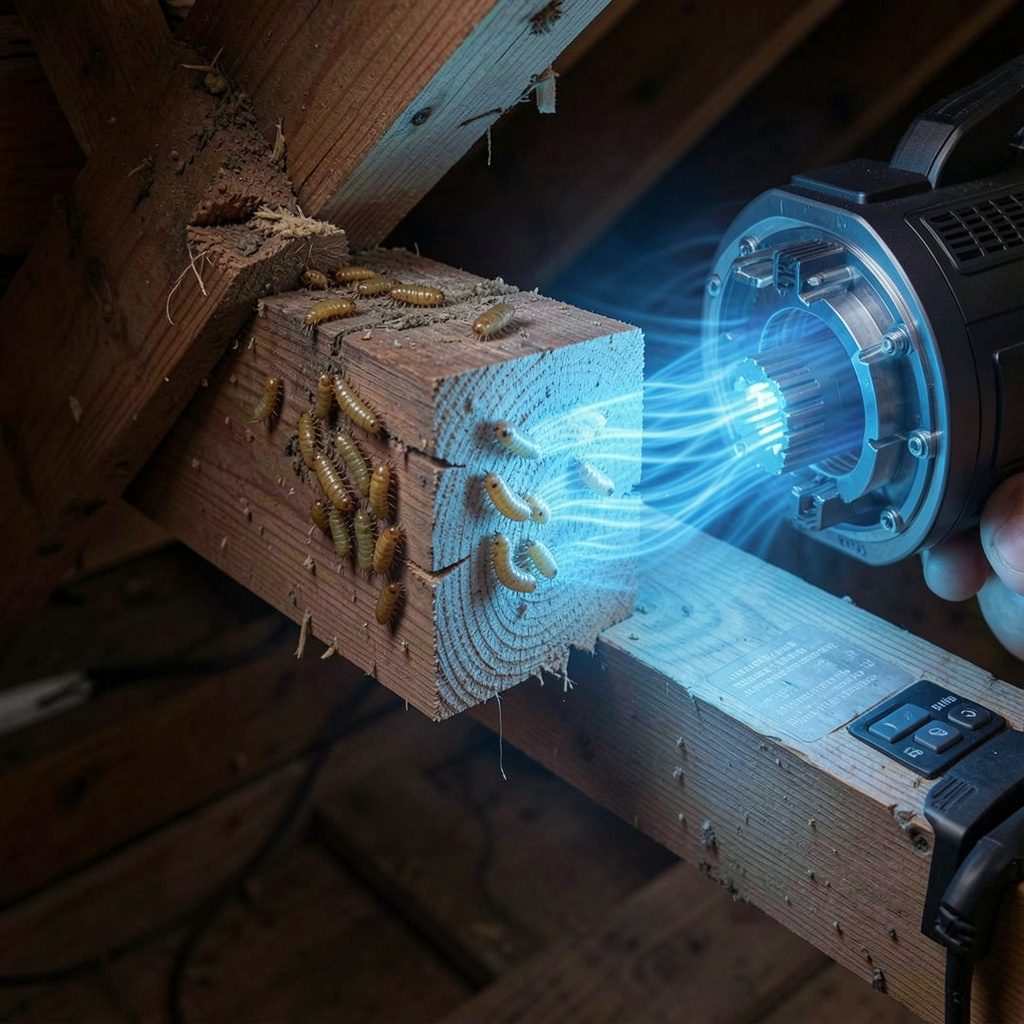
Microwave pest treatment is a chemical-free woodworm control method that uses controlled electromagnetic energy to generate heat inside timber.
Professional equipment directs microwave energy into infested wood, where it interacts with naturally occurring water molecules. Through a process known as dielectric heating, the timber reaches temperatures of approximately 55–60°C (131–140°F), which are lethal to:
- Woodworm larvae
- Beetle eggs
- Pupae
- Adult wood-boring beetles
Unlike chemical insecticides, microwave treatment relies entirely on heat rather than toxic substances.
Why Sustainability Matters in Pest Control
Conventional pest control products have helped protect buildings for decades, but many contain active ingredients that require careful handling and disposal. While modern pesticides are regulated and effective when used correctly, reducing unnecessary chemical use can provide environmental benefits.
Many homeowners today prefer treatment methods that:
- Minimize chemical exposure
- Reduce environmental pollution
- Preserve natural resources
- Protect indoor air quality
- Support sustainable building maintenance
Microwave treatment addresses many of these goals.
1. No Chemical Pesticides
Perhaps the greatest environmental advantage of microwave treatment is that it does not rely on chemical insecticides.
Instead of applying synthetic pesticides to timber, the treatment uses controlled heat to eliminate wood-boring insects.
This means:
- No chemical application to wooden surfaces
- No pesticide runoff
- No insecticide disposal requirements after treatment
- No lingering chemical residues on treated timber
2. No Harmful Chemical Residues
Traditional woodworm treatments may leave protective chemical residues on timber after application.
Microwave treatment leaves no pesticide residue, making it especially attractive for:
- Family homes
- Schools
- Museums
- Heritage buildings
- Historic churches
- Libraries
This also reduces the need for ongoing management of treated surfaces.
3. Lower Environmental Contamination
Because no pesticides are applied, microwave treatment reduces the possibility of chemicals entering the surrounding environment.
Potential benefits include:
- Reduced soil contamination
- Reduced water pollution risks
- Lower chemical exposure for non-target organisms
- Cleaner indoor environments
This makes microwave treatment an appealing option for environmentally conscious property owners.
4. Supports Sustainable Building Conservation
Historic buildings often contain original timber that cannot easily be replaced.
Microwave treatment supports conservation by helping preserve existing wooden structures rather than encouraging unnecessary replacement.
Retaining original materials reduces:
- Construction waste
- Demand for new timber
- Carbon emissions associated with replacement materials
Preserving existing timber is often one of the most sustainable choices available.
5. Reduced Waste Generation
When woodworm infestations are detected early, microwave treatment can eliminate the insects before severe structural damage develops.
This may reduce the need for:
- Timber replacement
- Demolition
- Disposal of damaged wood
- Extensive rebuilding
Extending the life of existing timber contributes to more sustainable property maintenance.
6. Safer Indoor Environments
Microwave treatment generates heat rather than releasing pesticides into living spaces.
For many homeowners, this means:
- No insecticide odors
- No chemical vapors
- No pesticide residues on exposed timber
While treatment areas must still be managed safely during the process, the absence of chemical application is an important environmental benefit.
7. Suitable for Sensitive Locations
Because microwave treatment avoids pesticides, it is often considered for locations where environmental protection is especially important.
Examples include:
- Museums
- Heritage properties
- Historic churches
- Art galleries
- Archive buildings
- Antique furniture collections
These environments often prioritize preserving both valuable timber and indoor environmental quality.
How Microwave Treatment Works
Microwave energy passes into the timber and interacts primarily with water molecules naturally present inside the wood.
These molecules rapidly vibrate, generating heat through dielectric heating.
When the timber reaches insect-killing temperatures, woodworm and other wood-boring insects cannot survive.
The treatment targets the pests without relying on chemical toxicity.
Microwave Treatment vs. Chemical Treatments
| Feature | Microwave Treatment | Chemical Treatment |
|---|---|---|
| Uses Pesticides | No | Yes |
| Chemical Residue | None | Usually present |
| Heat-Based | Yes | No |
| Environmental Impact | Lower | Moderate |
| Suitable for Heritage Timber | Often | Depends on the product |
| Indoor Chemical Odors | None | May occur |
Both methods remain valuable, and the most appropriate solution depends on the property’s condition, the extent of the infestation, and professional assessment.
Does Microwave Treatment Have Limitations?
Although environmentally friendly, microwave treatment is not suitable for every situation.
Its effectiveness depends on factors such as:
- Accessibility of the timber
- Extent of the infestation
- Timber thickness
- Moisture content
- Building construction
A professional inspection is essential to determine whether microwave treatment is appropriate.
Preventing Future Infestations Naturally
Environmental responsibility doesn’t end after treatment.
Long-term protection includes:
Control Moisture
Repair roof leaks and plumbing problems promptly.
Improve Ventilation
Good airflow helps keep timber dry and less attractive to wood-boring beetles.
Inspect Timber Regularly
Annual inspections help detect infestations before major damage develops.
Reduce Indoor Humidity
Healthy indoor humidity discourages woodworm and fungal decay.
Preserve Existing Timber
Maintaining original wood whenever possible is often more sustainable than replacing it.
Common Myths About Microwave Pest Treatment
Myth 1: Microwave Treatment Uses Radiation That Harms the Environment
Fact: Microwave treatment uses non-ionizing electromagnetic energy, which does not leave radiation behind after treatment.
Myth 2: Chemical Treatments Are Always More Effective
Fact: Both microwave and chemical treatments can be effective when used appropriately. The best option depends on the type and extent of the infestation.
Myth 3: Microwave Treatment Repairs Damaged Timber
Fact: The treatment eliminates insects but does not restore wood already weakened by woodworm or decay.
When Should You Contact a Professional?
Professional advice is recommended if:
- Fresh frass continues appearing.
- New exit holes develop.
- Structural timber is affected.
- Valuable historic wood requires treatment.
- You prefer a chemical-free solution.
- You’re unsure which treatment method is appropriate.
A qualified timber preservation specialist can inspect your property and recommend the most environmentally suitable treatment for your situation.
Conclusion
Microwave pest treatment offers an environmentally friendly alternative to traditional chemical woodworm control by using controlled heat instead of pesticides. This innovative approach eliminates wood-boring insects without leaving chemical residues, reducing environmental contamination while helping preserve valuable timber. It also supports sustainable building conservation by extending the life of original wooden structures and reducing unnecessary replacement.
Although microwave treatment is not suitable for every infestation, it represents an important advancement in eco-friendly pest management. When combined with regular inspections, moisture control, and proper timber maintenance, it provides homeowners and conservation professionals with a sustainable solution for protecting wooden structures while minimizing environmental impact.Visit online https://www.shashel.eu for more details .